
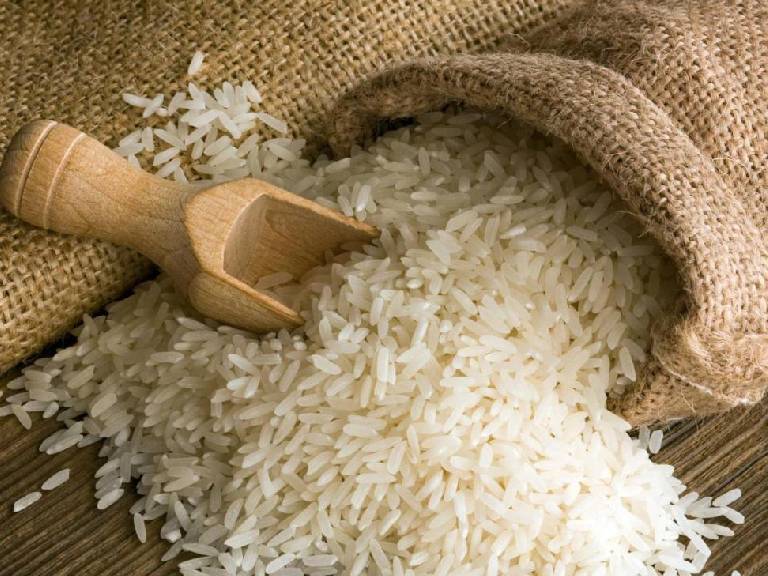
Rice as a cereal grain makes up the major portion of the staple diet consumed globally. Rice is the most important grain with regard to human nutrition and caloric intake, providing more than one fifth of the calories consumed worldwide by humans.
Genetic evidence has shown the origin of rice in the Pearl River Valley region of China, some 8,200–13,500 years ago. From East Asia, rice spread to Southeast and South Asia. Rice was introduced to Europe through Western Asia and to the Americas through Europeans when they colonized the American continent.
Rice cultivation is suitable in areas with a humid climate and high rates of rainfall, as it requires an abundant amount of water. It is a labor-intensive job, so it is often cultivated in areas with low labor cost. Traditionally, rice was cultivated by flooding the fields while, or after, setting the young seedlings — a method that decreases the growth of weeds and pests which have no submerged growth state.
Over the years the cultivation of rice has been affected by various technological, industrial, and environmental factors. A study conducted in 2010 showed that rice yield growth rates decreased in many parts of Asia due to increased temperatures and decreasing solar radiation, with yield rates falling 10–20% at some locations.
Rice Production and Export around the Globe
There are over 40,000 different types of rice produced in different parts of the world today. Rice remains the leading staple food crop consumed globally. Among the top, leading producers and exporters of the crop are China, India, Indonesia, Bangladesh, and Vietnam.
Because of its ideal climatic conditions, growing environments, and agricultural knowledge, China is the top producer of rice around the globe — producing about 197 million tons of rice in 2009 alone. India is the second largest producer, with 131 million tons in the same year; Indian Basmati rice in particular is popular globally as one of the best quality rice used in cooking.
Indonesia ranks third, producing 64 million tons in 2009. Other countries actively involved in rice production include Bangladesh, Vietnam, Thailand, Burma, the Philippines, Brazil, Pakistan, Cambodia, Japan, South Korea, the United States, Egypt, Iran, Sri Lanka, Madagascar, and Nigeria. In terms of pure dollar value, the top exporters of rice are India, Thailand, Vietnam, the United States, Pakistan, Italy, Uruguay, Brazil, Australia, Argentina, China, Belgium, and Spain.
The presence of fertile plains and ideal climatic conditions alone is not enough to produce high-quality rice — it also takes the right knowledge of plantation methods, seasons, and crop requirements. Leading causes of inadequate rice grain production around the world include ineffective measures against pests, post-harvest losses, poor transportation, inadequate technology, poor supply chain management, and inefficient infrastructure.
Classification of Rice Varieties
The most extensive collection of rice cultivars is held at the International Rice Research Institute in the Philippines, home to more than 100,000 forms of rice from around the world. Rice cultivars are typically classified by the shape and texture of the grain. While there are four main types — Indica, aromatic, glutinous, and Japonica — numerous varieties are used in cooking around the world:
Indica Rice
Grown in different parts of Asia, this normal white rice has long grains and a smooth texture, ideal for cooking.
Japonica Rice
Primarily grown in Southeast Asia and used to complement seafood and sushi. Short grained and sticky, mostly preferred in Japanese and oriental cuisine.
Aromatic Rice
Long grained with a distinct nut-like taste and aroma. Popular kinds include jasmine, wild pecan, and wehani rice, produced across the US, India, Thailand, Vietnam, and Korea.
Jasmine Rice
Mostly produced on the plains of Thailand — a long grained, aromatic rice that is easy to cook and contains very little amylopectin.
Basmati Rice
A specialty of India's northern plains and Pakistan, exported all over the world. A type of aromatic, long grained rice.
Glutinous Rice
Also known as Chinese rice — short grained with a sticky texture, similar to Japanese rice.
Arborio Rice
Cultivated in Italy with short, thick grains — used to make risotto, one of Italy's most popular dishes.